Case Study: PART X – A Better Outcome Than Bankruptcy
A practical explanation of when a Part X Personal Insolvency Agreement may produce a better outcome than bankruptcy.
A practical explanation of when a Part X Personal Insolvency Agreement may produce a better outcome than bankruptcy.
The family home is not automatically protected in bankruptcy. See how a co-owner purchased the trustee’s interest and retained the home.
A real Sunshine Coast SBR case study where a viable business avoided liquidation after the ATO accepted 40 cents in the dollar over two and a half years.
Learn the early warning signs of business, from cash flow issues to ATO debt and creditor pressure, and why early advice creates options.
A practical guide to Part X Personal Insolvency Agreements (PIAs), including eligibility, the process, creditor approval and alternatives to bankruptcy.
Learn what bankruptcy is, how the process works, what happens to assets and debts, and the role of a bankruptcy trustee in Australia.
Voluntary administration moves quickly. This article explains what directors and creditors can expect from the appointment process, the administrator’s investigations, creditor meetings and the possible outcomes, including a deed of company arrangement or liquidation.
Learn how a liquidation works, including the appointment process, the liquidator’s role, creditor claims, investigations and distributions.
Learn how a members’ voluntary winding up closes a solvent company and distributes surplus assets to shareholders.
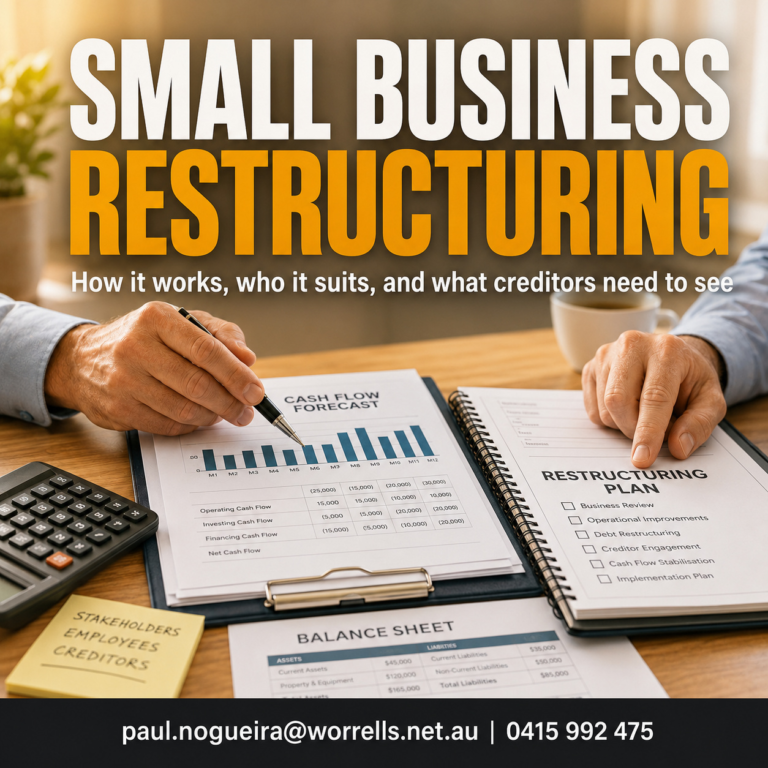
SBR allows eligible companies experiencing financial difficulty to stay in control and put forward a proposal to creditors to resolve its debts.
One of the common misconceptions about bankruptcy is that assets can be protected simply by transferring them to someone else before bankruptcy.

When SBR may be appropriate, when VA may be a better fit, and why timing matters for distressed companies.
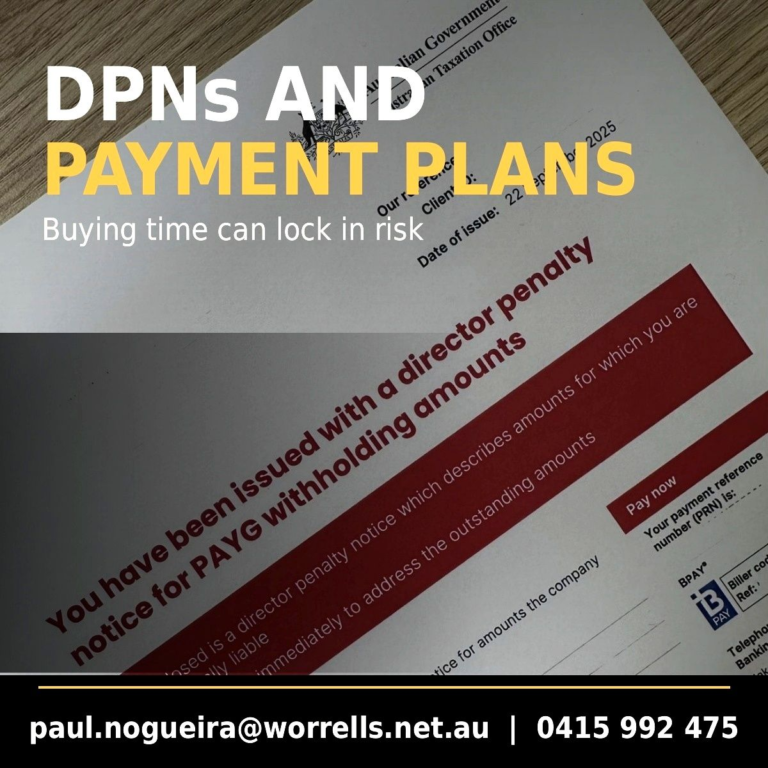
Why a payment arrangement with the ATO does not necessarily solve a Director Penalty Notice problem.
An overview of the corporate insolvency, personal insolvency, restructuring and specialist appointment matters Paul Nogueira deals with.
How employee entitlements are treated in liquidation and bankruptcy, including priority claims, secured creditors and FEG.

Why ATO repayment arrangements can help some businesses, but may not fix deeper viability or DPN risk issues.
Why failing to lodge BAS, IAS and superannuation reports can turn company tax debt into director personal exposure.
Why resigning as a director does not remove liability for past issues, DPNs, personal guarantees or director loans.
A practical note on ATO debt, DPN liabilities and which debts may or may not be released by bankruptcy.
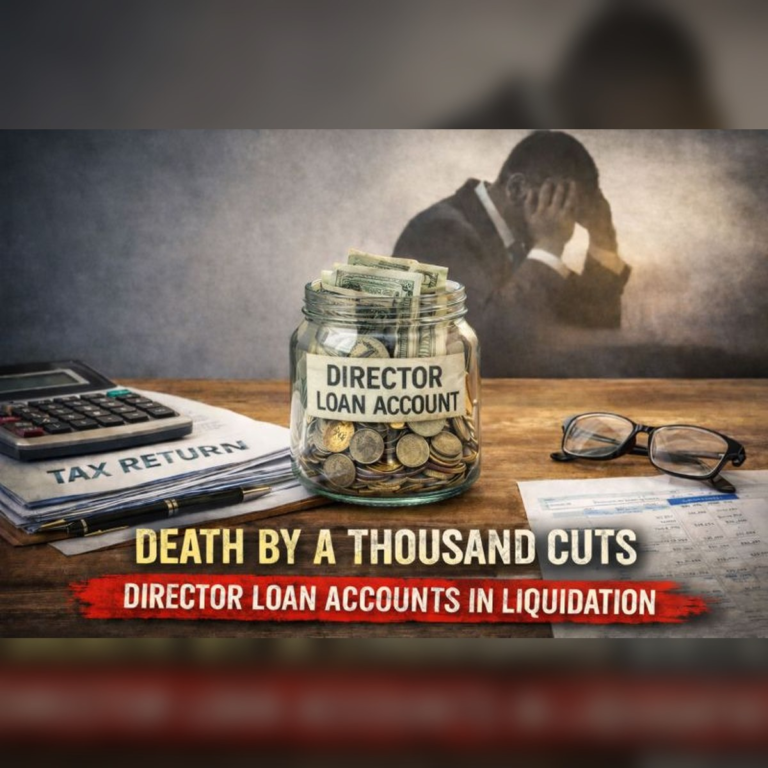
Why overdrawn director loan accounts can become a major issue when a company enters liquidation.

Why debts owed by one spouse cannot usually be offset against amounts owed to another spouse in a company liquidation.

A practical explanation of what accountants and advisers may need to provide to a liquidator under section 530B.
Why business owners and advisers should review where liability sits as business structures evolve over time.

When a statutory trustee for sale may assist where co-owners cannot agree on the sale of real property.
What the ATO commonly looks at in Small Business Restructuring proposals, including viability, compliance and transparency.
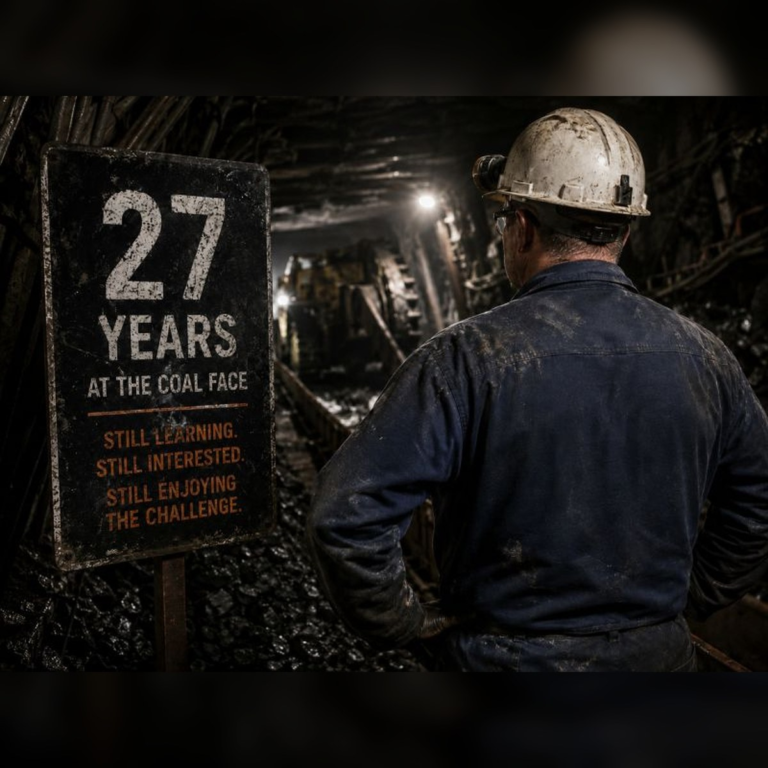
Reflections on 27 years in insolvency and restructuring, including what has changed and what has stayed the same.

Why NDIS providers should review cash flow and viability before funding or compliance changes narrow restructuring options.
How business failure can create personal consequences through guarantees, DPNs, director loans and bankruptcy issues.

Why trust restructuring for tax reasons should also consider bankruptcy and asset protection risk.
Why a retention of title clause may not protect a supplier if the PPSR registration is missing or defective.